Donington Park bathed under blissful blue skies and sunshine as the opening day of the annual Historic Festival kicked into life. With Bank Holiday meteorological conditions unfathomably favourable, strong crowds descended on the glorious Leicestershire parkland circuit for a fine day of action from all ages of classic racing cars. The smell of frying bacon fused with the unmistakeable tang of two-stroke oil from historic karts slithering around a purpose-built circuit on the Melbourne Loop as the action commenced on Saturday morning.
Now a three-day spectacular spanning the full Bank Holiday weekend, the Historic Festival has lodged itself firmly in the old car crowd’s calendar with a pleasing blend of close racing, strong car club involvement and paddock informality. Day one saw a heady mix of all these factors – and at a facility which continues to find its feet after the farcical pursuit of a F1 race almost brought it to its knees late in the last decade.

The car clubs were in typically varied attendance with sizeable gatherings of iconic Porsches, Ferraris, Aston Martins and Lotus models attracting interest throughout the day. Equally at home were traditional British sports cars with huge swathes of Triumphs filling the infield parking areas.
The relaxed, open paddocks were bustling all day with enthusiasts young and old able to get up close to some of history’s great racing cars, while road car gems nestled among the transporters for those with an interest. D K Engineering’s angular grey Ferrari Enzo attracted as much attention as any of the racers on display.

A long boulevard was laid out between the bottom of the Melbourne Loop and Redgate creating a huge amount of extra paddock space. Race-weary mechanics were allowed a little extra elbow room and teams were able to keep their various cars together rather than having them grouped and spread out according to category.
Special displays in the paddock celebrated the long and unique career of John Surtees, 80 this year. The variety of his endeavours were showcased with Lola, BRM and Vanwall steads as well as an example of one of his own F2 Surtees from his days as a constructor. It’s doubtful we’ll ever see another pilot so able on two wheels and four – not to mention a championship-winning team manager.
Also lauded was 50 years of the British F3 Championship with examples of successful machines from the 500cc days through to modern downforce drenched Dallara on display.
The heart of the event, though, remains the on-track action. A packed morning of qualifying prefaced a fine afternoon’s racing.
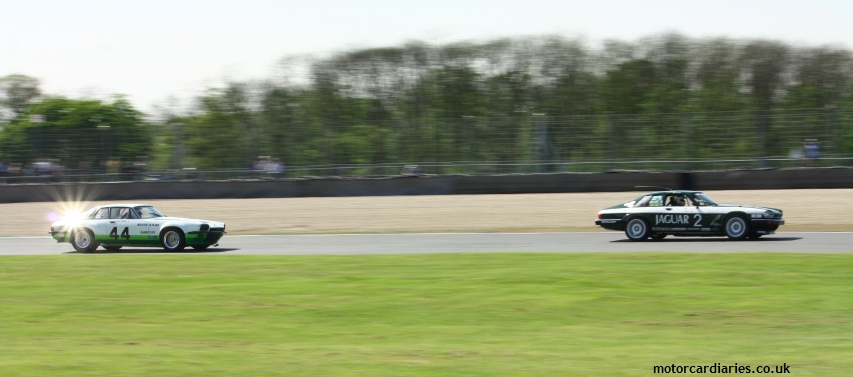
Opening proceedings was a half hour battle for 1966-1985 touring car honours. Featuring entries from a variety of categories – from relatively unmodified Group 1 Capris right up to J D Classics’ mighty Trans Am Group 44 Jaguar XJ-S – it was a fitting opening to the event and a fabulous visual and aural spectacle.
The savage XJ-S signalled its intent with a tight pole position but problems at the start left it a lap down from the flag. With rapid pilots Chris Ward and Gary Pearson aboard and barrel-chested V12 soundtrack in full effect, its progress was worth the entry fee alone.
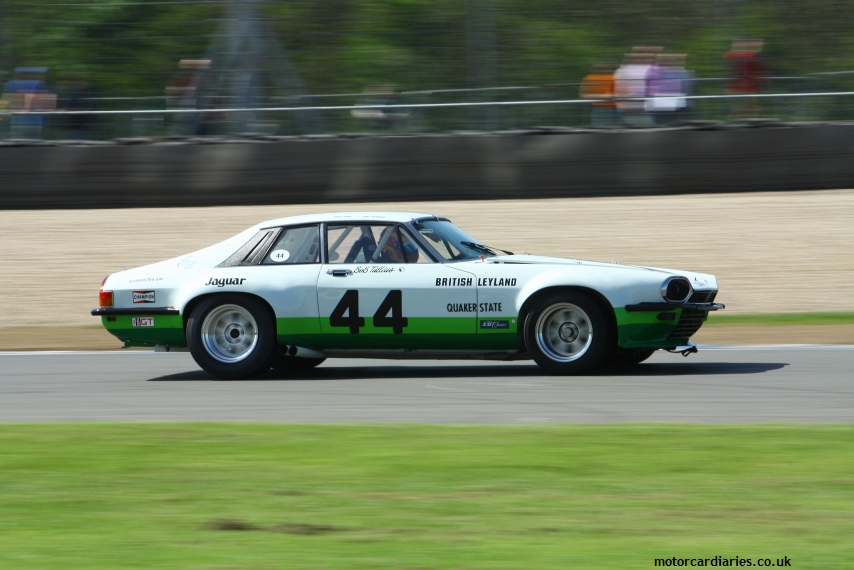
In spite of the might of Bob Tullius’s best, it was touring car and GT hero Steve Soper who made hay early on in his Broadspeed Capri. He wailed into a huge lead, pursued by an evocative field of TWR Rover SD1s and XJ-S, Datsun 240Z, and Patrick Watts’ remarkable little MG Metro Turbo. Starting right at the back after qualifying problems was Chris Scragg’s Jaguar XJ12C – another of Broadspeed’s wide-arched saloon weapons.

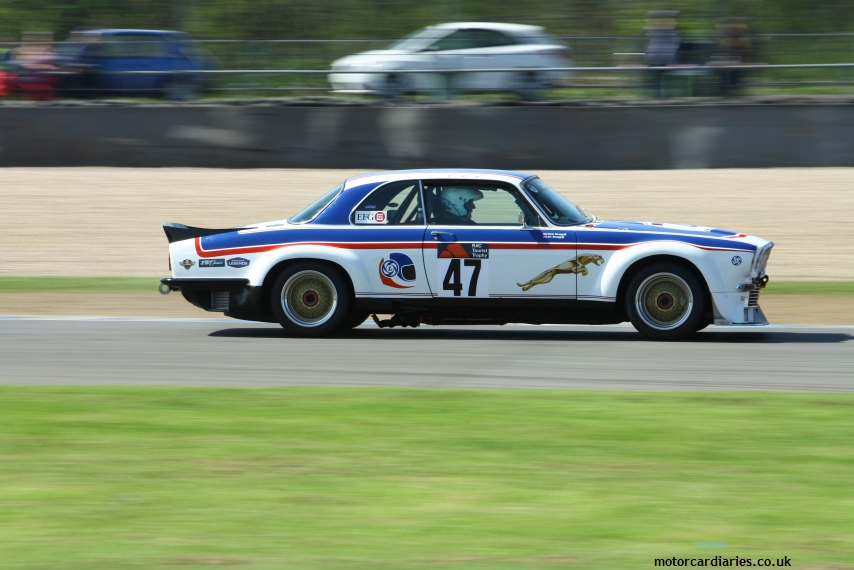


Soper was untouchable out front but behind Scragg fought his way up to a fine third and Gary Pearson was typically impressive aboard the Group 44 XJ-S, finally embroiling himself in battle with the TWR version. A trio of genuine V12 Jaguar saloons from a golden period of saloon racing history…magic!
In spite of facing strident V12 power, it was Patrick Watts in the Metro who emerged as Soper’s nearest challenger; though over a minute behind, sharing with Nick Swift, John Young having brought the Capri safely home. All that was missing was a couple of BMW CSLs to bring a straight-six flavour to proceedings. Next year…
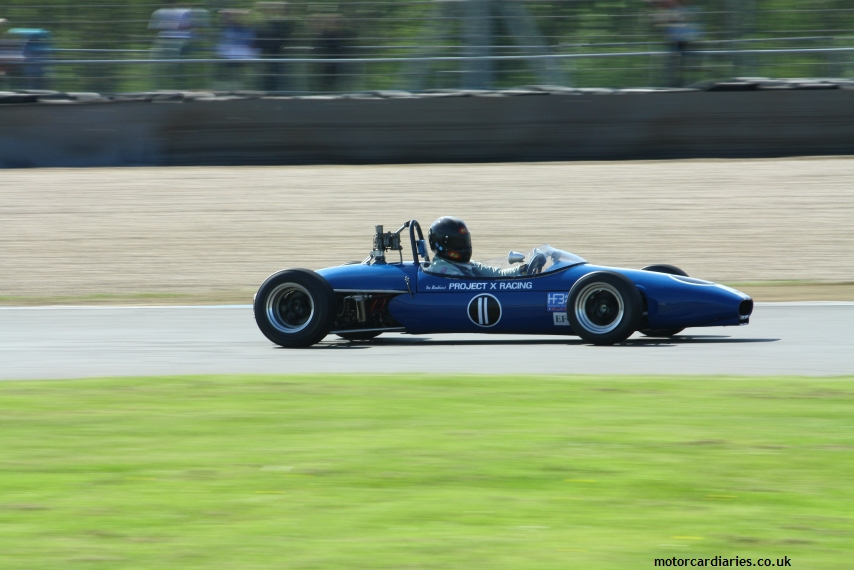
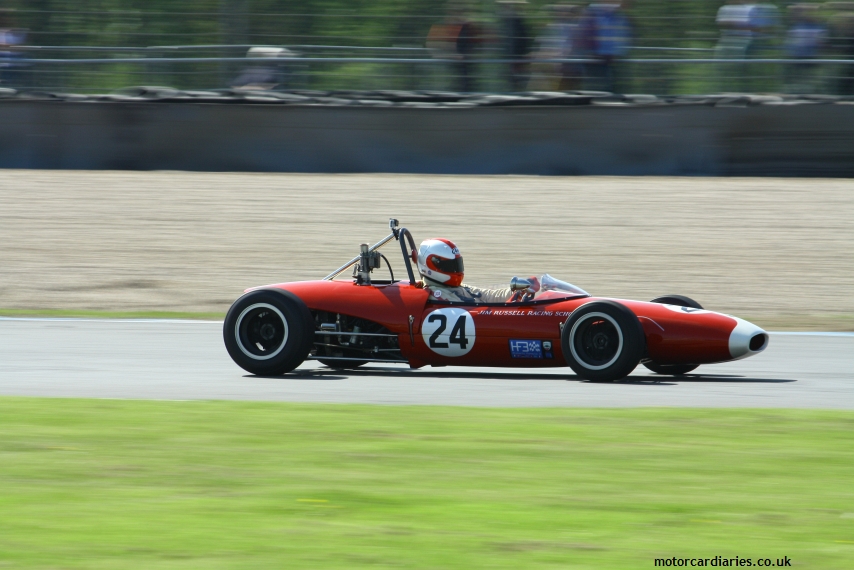
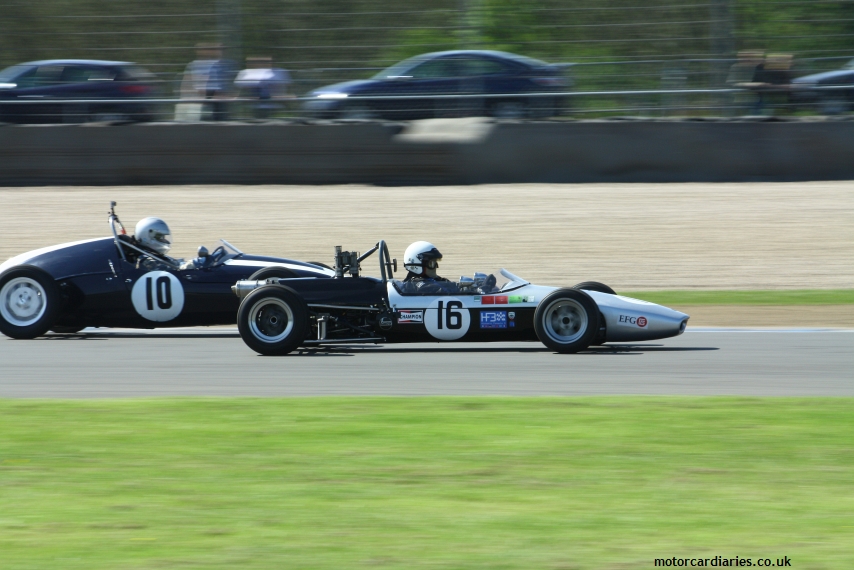
Race two was a close encounter for F3 screamers of the 1960s. A representative grid of Chevrons, Brabhams and Tecnos did battle and a close trio emerged at the front with Steve Seaman’s Brabham BT21 fighting Ian Bankhurst’s Alexis and Paul Waine’s De Sanctis. Waine overcooked it at Redgate and spun before later retiring. That left Seaman to take a relatively easy win after Bankhurst also retired just a few laps from the end; fastest lap being scant reward for a fine drive.
The day’s third race added a new layer of intrigue. An hour-long thrash for pre-1963 GTs, a vast field swamped Redgate from a rolling start. Not unexpectedly it was the maestro Gary Pearson who emerged ahead, having put the Ferrari 250 GT SWB he shared with Jackie Oliver on the pole. Behind him it took only a few corners before Wolfgang Friedrichs had spun his Aston Martin DB4 GT into the Old Hairpin gravel trap. The Maserati safety car emerged to calm the pack while the precious Aston was extracted.
Friedrichs successfully toured the Aston back to the pits where it was given a clean bill of health and sent on its way, albeit now wearing a thick layer of dust. Pearson wasted no time in asserting himself as the safety car peeled in and soon opened up a strong lead. Behind him, Nick Naismith assumed second, with Simon Hunt’s AC Cobra, Carlos Monteverde’s Aston DB4 and the E-Types of Jon Minshaw and the Cottingham brothers keeping a watching brief.

Pearson pitted early to permit himself time to squeeze behind the wheel of Monteverde’s Aston Martin for the conclusion of the race – enjoying the distinction of running first and third. Naismith and Minshaw retired which gave Patrick Blakeney-Edwards a clear run to second, having relieved Hunt of the narrow-hipped AC Cobra.
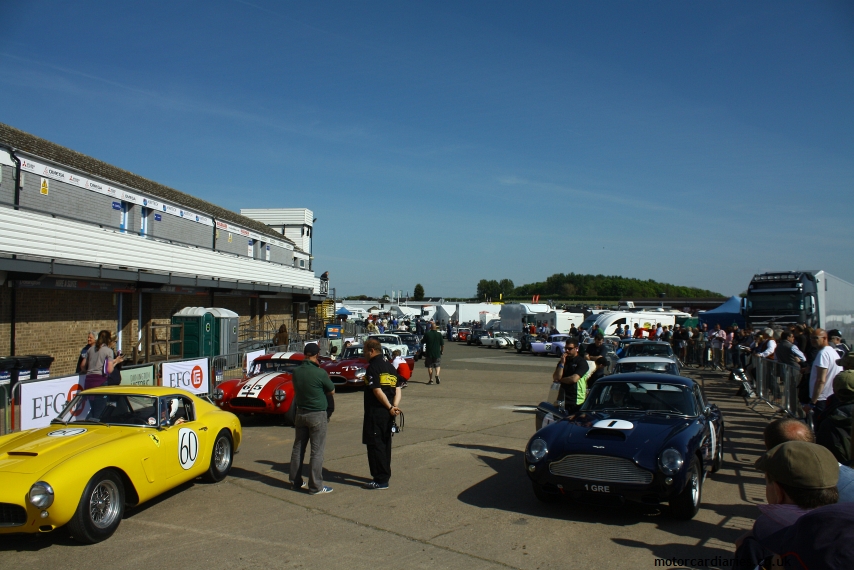
With Pearson struggling for full revs in the DB4, David Cottingham pounced to snatch third and it looked set to end with Ferrari, AC and Jaguar occupying the podium positions. With five minutes to spare, however, the plot twist fell. The sonorous Ferrari, now with Oliver aboard, and the Cottingham E-Type had disgraced themselves in the pitlane, each earning a stop-go penalty.
Evidently focused on the job at hand, the two pilots missed the signals from the pit lane. Cottingham eventually spotted his and dived into the pits on the penultimate tour. Though experienced in the extreme, Oliver missed the signal and continued to the flag without interruption. At the time of writing, the gorgeous yellow Ferrari was published as the victor, but it’s unlikely to remain so.

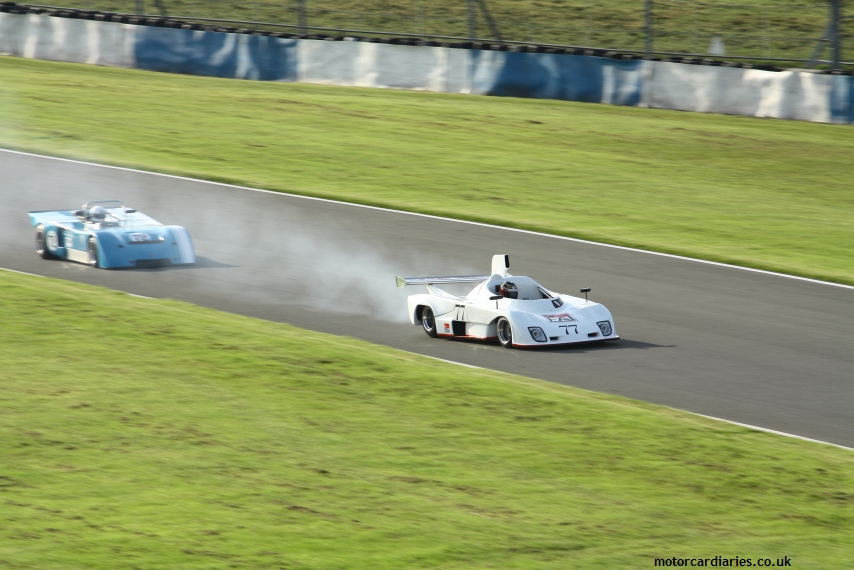
With so much action closing the pre-63 GT race, it was a relief to face a traditional two-way scrap for honours in the HSCC’s Martini Trophy for sports racers up to two litres. Featuring a small but spectacular grid of the 1960s and 1970s’ finest junior prototypes, it was veteran Ian Flux who made the early running in Sean Walker’s Osella PA3. Behind him, only David Gathercole could keep pace and his charge in his familiar Lola T210 was compelling. With Flux carrying huge speed as he speared down the Craners, Gathercole was able to close under braking and the lead yo-yoed closely over the opening 20 laps.
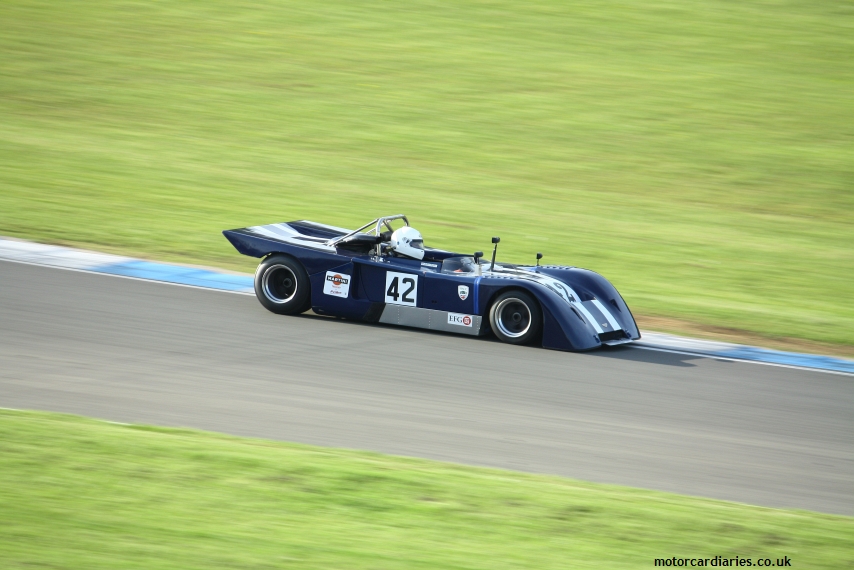

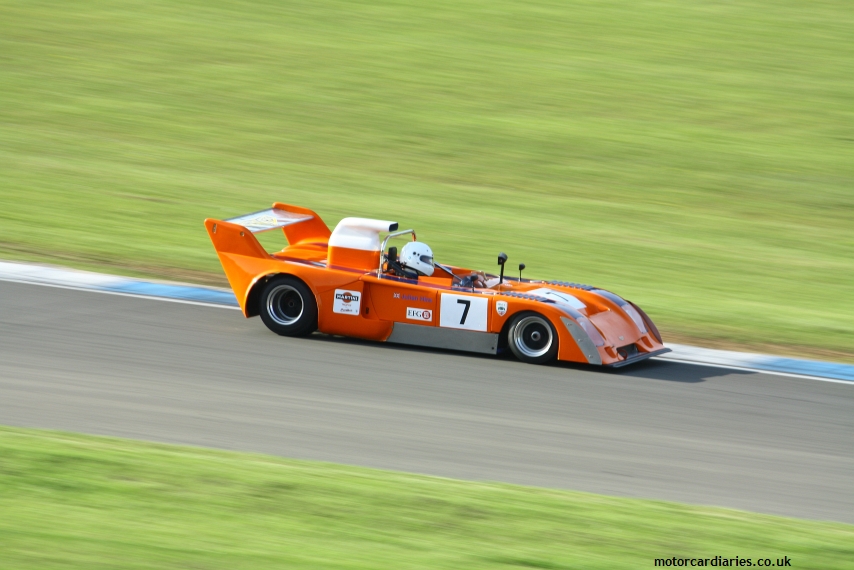
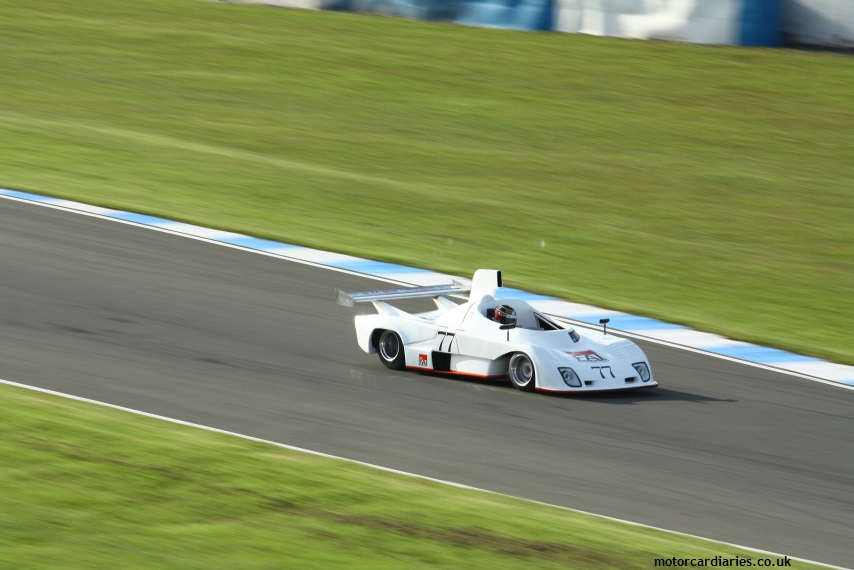
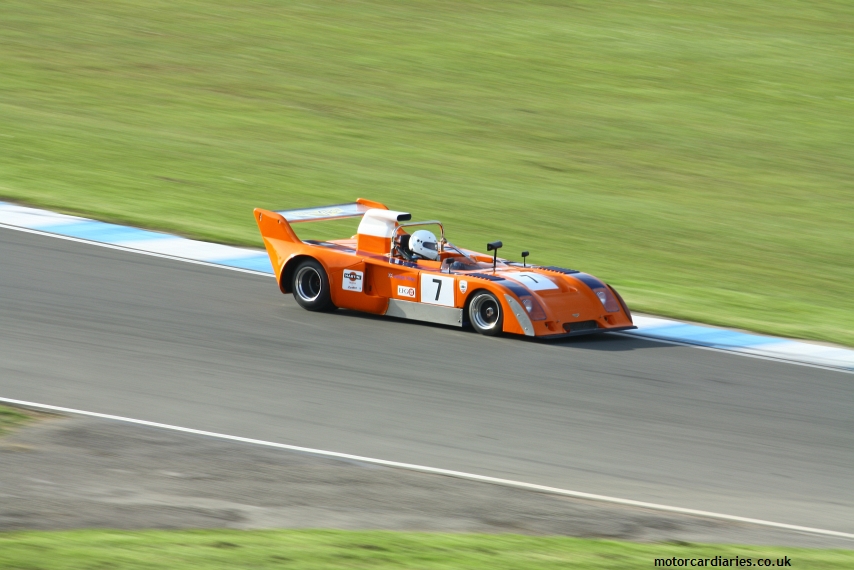
It was apparent, though, that all might not be well aboard the Osella. It had been smoking gently from about mid-race but this increased in severity and on the 21st tour, Flux brought the charismatic Italian to a halt at Redgate. This left Gathercole to take the flag unchallenged, almost a minute ahead of Robert Oldershaw’s T212 Lola. It was a disappointing end to a gripping race.
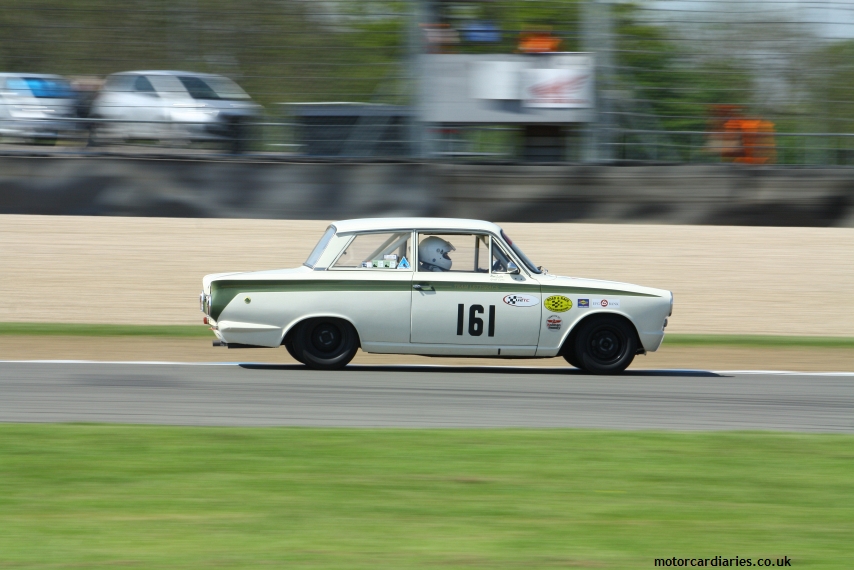
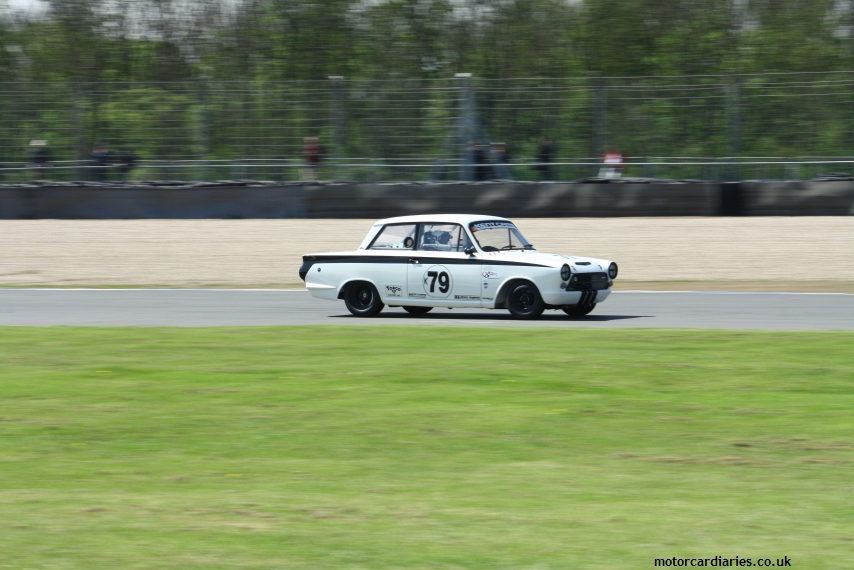
The day’s final encounter was perhaps its best. A 45 minute, two-driver race for British saloon cars of the 1958 – 1966 period. Featuring all manner of prosaic old warhorses that your dad probably owned during the 1960s, the final 15 minutes featured some bare-knuckle fighting from two of historic racing’s finest exponents.
The race started with the unusual Studebaker of Nick Whale and Richard Dutton (boss of contemporary powerhouse Fortec) taking an early lead. This wasn’t to last as John Young hit the front, looking comfortable until he limped out of the chicane and into the pit lane and a disappointing retirement.
Then it was Whale’s turn to retire and Sean McInerney, driving his BMW 1800TiSa solo, who appeared strongest. That reckoned without the determination of Martin Stretton, who had taken over David Tomlin’s Lotus Cortina and looked in typically forceful form. With about 15 minutes of the race remaining, McInerney emerged from his pitstop and into the race of his life – he and Stretton both wanting the same piece of Tarmac for the balance of the race.
This became a titanic scrap as both drivers rolled their sleeves up and got stuck in, frightening backmarkers as they went. Lap after lap the pair launched into the chicane side-by-side, Stretton belching flames belligerently as he went, both on the lock stops on the exit using all the track and sometimes the grass. It really was an amazing dice but McInerney was able to eek out a small but decisive gap as they entered the final lap and he used all his guile and bravery through the back markers to hold a slim lead to the finish. A fastest lap below even his qualifying time will have seemed poor compensation for Stretton’s awesome efforts.
And so the curtain fell on a terrific day’s action at Donington Park. Blessed with blue skies and the many sights and sounds of the best of historic racing, it set up a weekend to remember.